

Pain in pets does not always look like crying or limping. A dog might stop asking for walks, while a cat might stop visiting a favorite perch. Either may continue eating and interacting with family despite discomfort.
Recognizing the signs of pain in dogs and cats starts with knowing your pet’s usual habits. Changes in movement, grooming, appetite, sleep, or social behavior deserve attention.
At Scottsdale Animal Hospital & Phoenix Mobile Veterinarians, we help owners understand these changes and choose an appropriate care setting.
Seek emergency veterinary care immediately for breathing difficulty, collapse, severe pain, suspected poisoning, or repeated straining with little or no urine. Do not wait for a mobile appointment or an online form response.
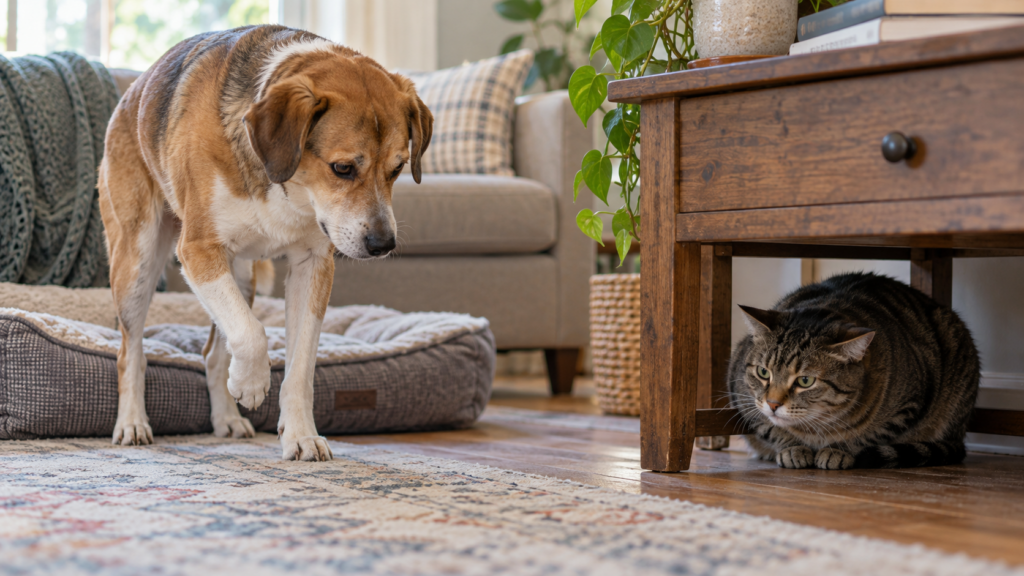
Why Pain Can Be Easy to Miss
Pain may affect everyday activities before causing an obvious limp or cry. Gradual changes are particularly easy to mistake for aging, stubbornness, or a new preference.
A dog that waits beside the car may be avoiding a painful jump. A cat that sleeps downstairs may have difficulty reaching a usual resting place.
These observations do not establish a diagnosis. Similar changes can occur with illness, anxiety, sensory changes, or environmental stress. Your veterinarian considers the pattern alongside an examination and medical history.
Common Patterns in Dogs and Cats
The table below describes possible signs, not strict differences. Dogs can become quiet and withdrawn, and cats can vocalize or seek attention.
| Area to watch | Dogs may | Cats may |
| Movement | Walk stiffly, hesitate on stairs, or shorten walks | Stop jumping, use intermediate steps, or choose lower surfaces |
| Interaction | Withdraw, become clingy, or resist handling | Hide, interact less, or become less tolerant of petting |
| Grooming | Repeatedly lick or chew an area | Groom less or overgroom one area |
| Rest | Pace, pant at rest, or struggle to settle | Remain hunched or change sleeping locations |
| Eating | Drop food, chew differently, or resist lowering the head | Eat less, approach food and walk away, or change posture |
| Sounds | Whine, yelp, whimper, or groan | Hiss, growl, yowl, or become unusually quiet |
One behavior alone cannot confirm pain. Look for changes from your pet’s normal habits and tell your veterinary team what you notice.
How Dogs May Show Pain
Movement and Rest
A painful dog may rise slowly, shift weight away from a limb, or hesitate on slippery floors. Some dogs simply reduce activity without developing an obvious limp.
Watch for difficulty lying down or getting comfortable, too. Pacing, repeated position changes, and panting without recent exercise or heat exposure can accompany pain, but they also have other causes.
Breathing difficulty, pale or blue-gray gums, collapse, or rapidly increasing weakness require emergency assessment.
Behavior and Handling
A normally social dog may withdraw or become less tolerant of touch. Another may follow family members more closely.
Growling or snapping can occur when a painful area is approached. Avoid punishment, pressing on the area, or forcing an examination. Keep children and other pets away if handling appears unsafe.
Repeated Licking
Licking a paw, joint, wound, or other area may signal discomfort. It can also result from itching, skin disease, infection, or anxiety.
Note where and when it occurs, but avoid assuming that licking identifies the underlying cause.
How Cats May Show Pain
Jumping and Grooming
Cats may stop using high resting places, pause before jumping, or take an indirect route onto furniture. A chair may become an intermediate step to reach a bed.
Reduced grooming can leave mats or an untidy coat, especially where reaching requires uncomfortable movement. Some cats instead overgroom an area.
These changes deserve discussion even when a cat is older. They should not automatically be dismissed as normal aging.
Hiding and Social Changes
A cat may spend more time under furniture, sleep somewhere unusual, or resist previously welcome petting. Others seek more attention.
Compare the behavior with that individual cat’s usual preferences. A sudden withdrawal in a social cat may be more noticeable than hiding in a naturally reserved cat.
Our senior cat care includes discussing changes in mobility, grooming, and behavior. Report new symptoms rather than waiting for the next routine visit.
Litter Box Changes
Joint discomfort may make a high-sided litter box difficult to enter. Urinary problems can cause frequent trips, straining, vocalization, or urination outside the box.
Repeated straining with little or no urine may indicate a urinary blockage and requires immediate veterinary assessment. Do not wait for a mobile visit, even if you are unsure whether the problem is urination or constipation.
Can a Pet Eat Normally and Still Be in Pain?
Yes. Continued eating does not rule out discomfort. Some pets eat more slowly, leave part of a meal, drop food, or change how they chew.
Oral problems may affect chewing, while neck or joint discomfort may make lowering the head difficult. Nausea and abdominal problems can also alter interest in food.
These signs overlap, so watching the bowl cannot identify the cause. Tell your veterinarian whether the change involves appetite, chewing, posture, or swallowing.
Contact the team promptly for a new appetite change, particularly if your pet is eating very little or has other symptoms. Avoid waiting for complete food refusal before seeking advice.
What Should You Record at Home?
Useful information includes:
- When the change began and whether it was sudden or gradual.
- Activities your pet avoids or performs differently.
- Changes in food intake, drinking, sleep, grooming, or bathroom habits.
- Current medications, supplements, and any recent injury or possible exposure.
Short videos of voluntary walking or rising can help with intermittent problems. Do not encourage jumping, stairs, exercise, or handling to demonstrate pain. Avoid touching a sensitive area just to test the reaction.
A brief description of what changed is more useful than trying to name the condition yourself.
Choosing the Right Care Setting
Mobile Visits for Stable Concerns
A mobile sick pet visit may suit a stable dog or cat whose symptoms can safely be evaluated at home.
Examples include mild stiffness or a non-emergency change in energy or appetite. Suitability depends on the whole picture, including severity, duration, other symptoms, appointment availability, and likely testing needs.
Call the team for guidance before choosing a mobile appointment. A familiar setting can be helpful for some pets, but the medical need determines where care should take place.
Hospital Care for Additional Resources
Pets needing imaging, anesthesia, dental procedures, surgery, advanced diagnostics, or closer monitoring need hospital resources.
Our hospital-based veterinary care complements mobile visits within the same locally owned practice. The team can recommend the next step when an at-home assessment is insufficient.
An examination may lead to targeted laboratory testing or imaging. Testing is selected according to the findings rather than treating one test as an answer to every possible cause.
Emergency Care Without Delay
Scottsdale Animal Hospital is not a 24-hour emergency hospital. Urgent concerns may be seen case by case during regular business hours.
Breathing difficulty, collapse, seizures, major trauma, heavy bleeding, suspected poisoning, inability to urinate, a swollen or painful abdomen, severe pain, or rapidly worsening symptoms warrant immediate emergency attention.
Our veterinary emergency guidance explains where to seek help. Do not delay departure to complete an appointment request.
Do Not Give Human Pain Medication Without Veterinary Direction
Human pain relievers can cause serious poisoning in dogs and cats. Potential complications include digestive injury, kidney damage, liver damage, and other effects. Acetaminophen is particularly dangerous to cats.
Do not give medication prescribed for another pet or restart an old prescription without checking with your veterinarian.
If medication has already been given accidentally, contact a veterinarian or emergency veterinary hospital immediately. Have the product name, strength, amount, and approximate time available. Do not wait for symptoms.
Frequently Asked Questions
Does a dog always limp when in pain?
No. Reduced activity, difficulty settling, reluctance to climb stairs, or a change in handling tolerance may occur without an obvious limp.
Is hiding always a sign of pain in cats?
No. Hiding can reflect illness, stress, or environmental changes as well as pain. A new pattern, especially with appetite or mobility changes, deserves veterinary guidance.
Can these changes be normal aging?
Aging can change activity, but new limitations should not automatically be accepted as inevitable. An examination can help identify conditions affecting comfort or function.
Should I wait to see whether my pet improves?
Call your veterinary team for advice about new or unexplained changes. Emergency signs require immediate care. The appropriate timing depends on the symptoms and your pet’s condition.
Can a mobile veterinarian assess pain?
Many stable concerns can be assessed at home. Pets needing imaging, anesthesia, procedures, intensive monitoring, or emergency treatment require a different setting.
Get Guidance About Changes in Your Pet
You do not need to identify the cause before asking for help. Explain what has changed, when it began, and whether your pet is getting worse.
At Scottsdale Animal Hospital & Phoenix Mobile Veterinarians, we help families choose between appropriate in-home and hospital care.
For stable, non-emergency concerns, Request a Veterinary Evaluation to discuss the next step. Seek immediate emergency care for urgent warning signs.